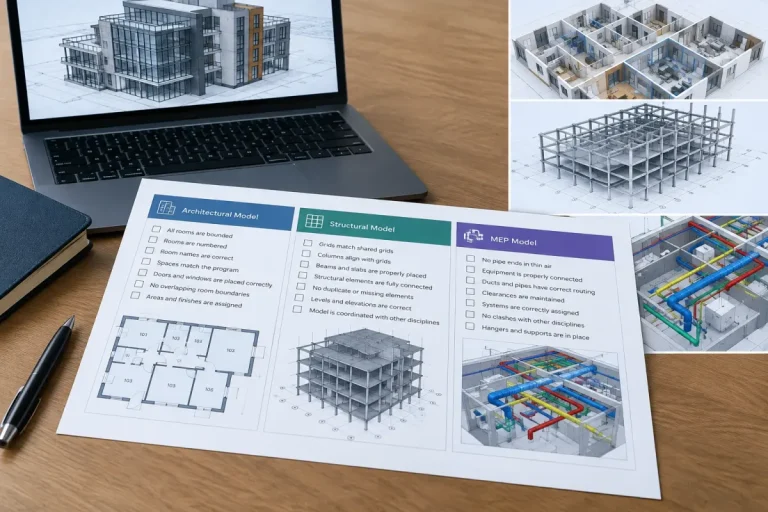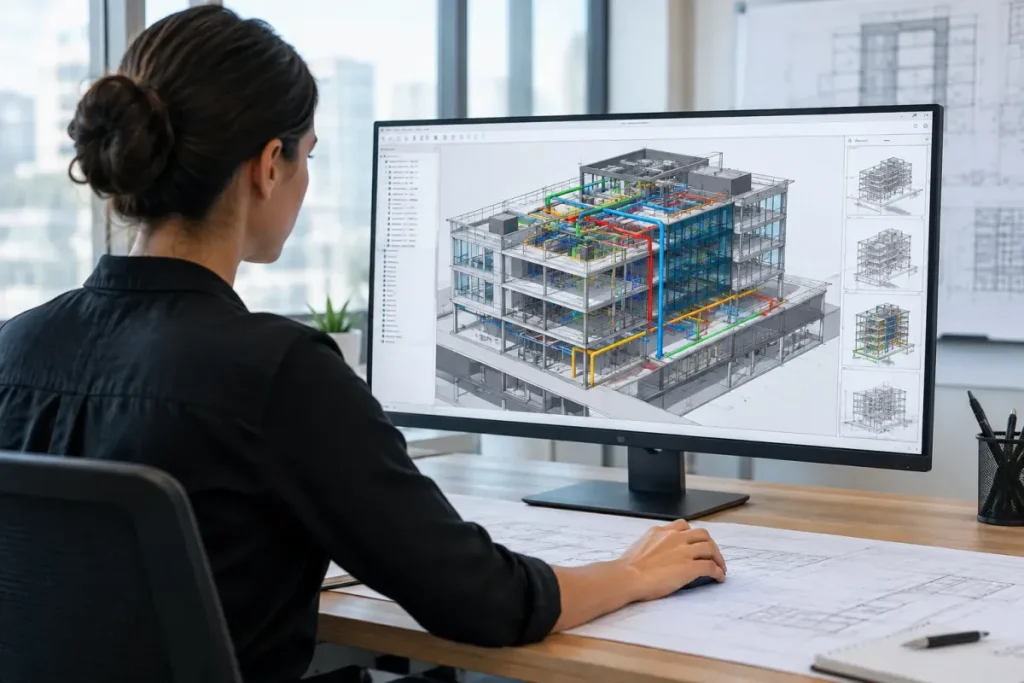

Every project has a person who, at some point in the week, is the only one who sees the whole building. The architect sees the architecture. The structural engineer sees the frame. The mechanical subcontractor sees the ducts. The BIM coordinator sees all of it at once, aligned, tested and, with luck, understood. It is a peculiar vantage point. It brings great influence and no formal authority: coordinators rarely design anything or build anything, yet when they do their work well, a project’s problems appear on a screen in a meeting room instead of on a site, where they cost ten times as much.
I have been a BIM coordinator, and I have trained and hired many. The best ones share a combination of traits that does not appear on any course syllabus: they are technically fluent enough to understand every discipline’s model, organized enough to run a repeating cycle without drama and diplomatic enough to tell a senior engineer that his duct is in the wrong place, in a way that makes him want to fix it. They are translators. They turn thousands of clashes into dozens of decisions, and dozens of decisions into actions that someone owns.
This guide explains the coordinator’s role and how to enter and grow in it. It covers what coordinators do, the responsibilities by project stage, the skills and qualifications, the tools, training and certification routes, how to move from modeling into coordination, how to build evidence, what a typical day and week look like, challenges and how to handle them, progression and the mistakes to avoid. It builds on BIM Coordination: The Complete Guide and sits between How to Become a BIM Modeler: Skills, Training, and Career Path and How to Become a BIM Manager: The Complete Career Guide. Titles and responsibilities vary by company and country; use this as a map, not a rule.
The Short Answer
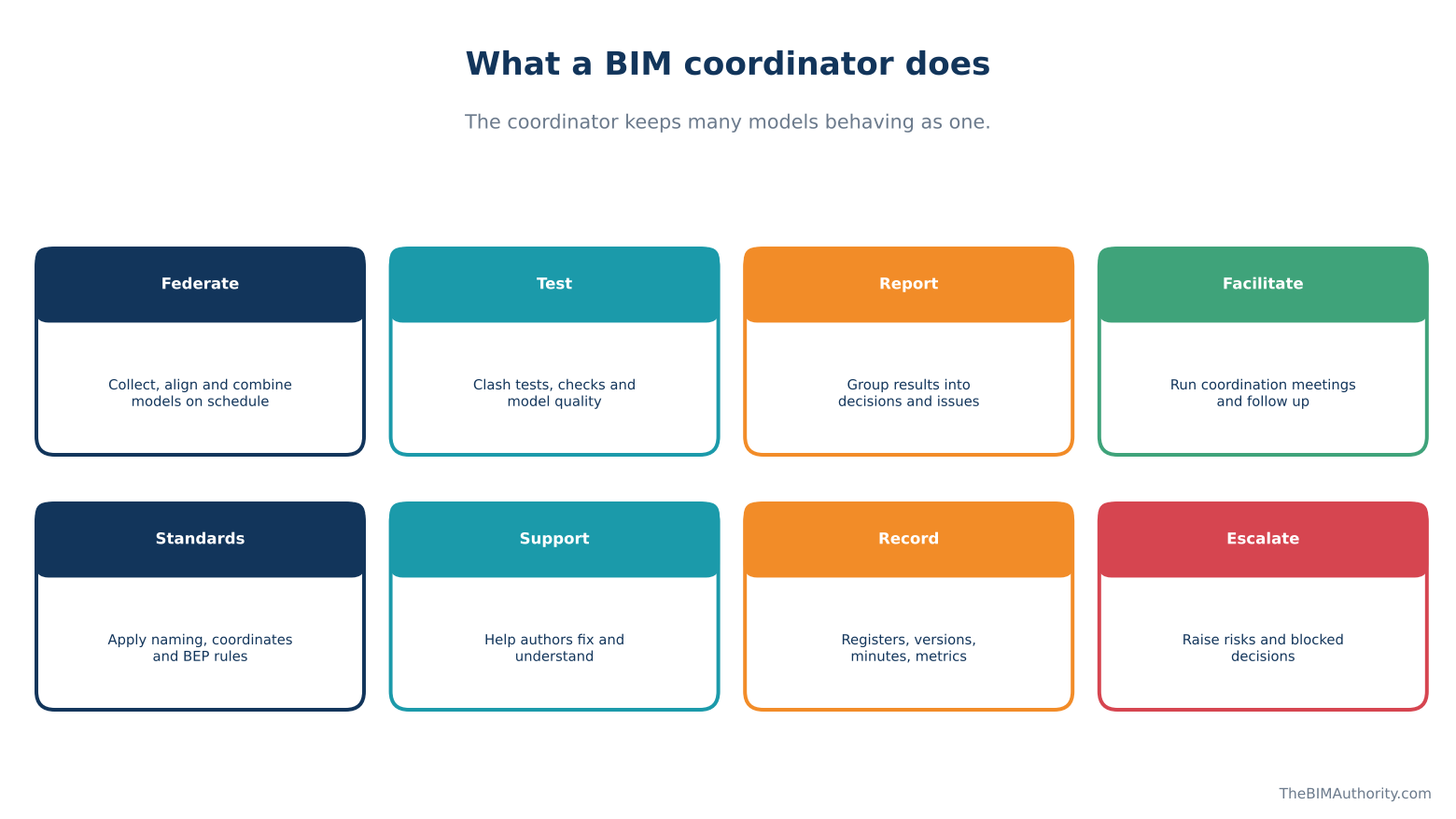
| Responsibility | What it means |
|---|---|
| Federate | Collect, align and combine models on schedule |
| Test | Run clash tests, checks and model quality reviews |
| Report | Group results into decisions and issues |
| Facilitate | Run coordination meetings and follow up |
| Standards | Apply naming, coordinates and BEP rules |
| Support | Help authors understand and fix problems |
| Record | Keep registers, versions, minutes and metrics |
| Escalate | Raise risks and blocked decisions |
In one sentence:
A BIM coordinator keeps many discipline models behaving as one: collecting, testing, reporting, facilitating and following up until issues are closed.
What a BIM Coordinator Does
Core Duties
| Duty | Details |
|---|---|
| Set up and maintain the federated model | Receive models, check coordinates and versions, combine them. See How to Create and Manage a Federated BIM Model |
| Run coordination cycles | A repeating schedule: models in, tests run, issues out, meeting, fixes, verify |
| Detect and manage clashes | Define clash matrices and tolerances; run tests; group results. See BIM Clash Detection: The Complete Guide and How to Create a BIM Clash Detection Matrix |
| Check model quality | Run checks before coordination: information, naming, health. See BIM Model Checking: Geometric and Information Validation |
| Manage issues | Create, assign and track issues; use BCF where appropriate. See BIM Issue Tracking and Resolution Using BCF |
| Run meetings | Prepare, chair, record. See BIM Coordination Meetings: Planning, Reporting, and Best Practices |
| Enforce standards | Naming, coordinates, levels, exchange settings from the BEP |
| Support authors | Explain problems and options; help with exports |
| Keep records | Model register, test library, reports, decisions |
| Report progress and risk | To the BIM manager and project team |
| Contribute to planning | Input to the BEP, schedules and requirements |
Responsibilities by Stage
| Stage | Focus |
|---|---|
| Early design | Set up coordinates and levels; agree model breakdown; define zones; help write the BEP |
| Developed design | Run regular coordination cycles; focus on major systems and spatial allocation; check information requirements |
| Technical and construction design | Detailed coordination with trades; clearance and access; penetrations; fabrication interfaces |
| Construction | Site-focused coordination; sequencing; installation issues; as-built updates |
| Handover | Verify as-built models and data; support delivery of the AIM. See BIM for As-Built Documentation and Project Handover |
Who the Coordinator Works With
| Partner | Interaction |
|---|---|
| BIM manager | Standards, planning, escalation |
| Discipline modelers and leads | Daily coordination |
| Design team and engineers | Decisions and options |
| Contractors and subcontractors | Constructability, installation, fabrication models |
| Client or owner’s team | Requirements, reporting |
| Information manager | CDE, statuses, security. See BIM Information Manager: Roles, Skills, and Career Opportunities |
| Project managers | Schedules and risks |
The Skills That Matter
Technical
| Skill | Why |
|---|---|
| Fluency in more than one authoring tool’s outputs | You will receive models from many tools; understand how they behave |
| A coordination tool | Aggregation, clash tests, viewpoints and reports. See Autodesk Navisworks: The Complete BIM Coordination Guide, Navisworks Clash Detection: Step-by-Step Guide, Solibri: BIM Model Checking and Validation Guide and Revizto: BIM Coordination and Issue Management Guide |
| IFC and open exchange | Models arrive as IFC; you must judge their quality. See How to Export and Import IFC Models Correctly |
| Coordinates and georeferencing | A model in the wrong place is the commonest failure. See BIM Georeferencing: Coordinate Systems and Model Positioning |
| Discipline understanding | Architecture, structure and MEP at working level; knowledge of construction and installation |
| Data and properties | Classification, parameters, search sets |
| Basic automation | Reports, batch tests, checks. See BIM Automation: The Complete Guide |
| Performance management | Handling large federations |
Process and Organizational
| Skill | Why |
|---|---|
| Planning | Cycles, calendars, dependencies |
| Documentation | Clear registers and reports |
| Standards literacy | BEP, EIR, ISO 19650 concepts. See ISO 19650 Explained: A Complete Guide for BIM Professionals |
| Prioritization | Which issues matter most |
| Attention to detail | Versions, coordinates, tolerances |
Interpersonal
| Skill | Why |
|---|---|
| Communication | Explain problems clearly to engineers, managers and trades |
| Diplomacy and assertiveness | Ask for changes without blame; hold deadlines |
| Facilitation | Run meetings that decide |
| Conflict handling | Resolve disagreements about responsibility |
| Teaching | Help authors improve |
| Reliability | The cycle depends on you |
Qualifications and Routes
There is no single required qualification. Employers look for a combination of experience, skills and evidence.
| Route | Description |
|---|---|
| From modeling | The most common: a modeler with several years’ experience moves into coordination |
| From design or engineering | Architects and engineers with BIM skills move into coordination |
| From construction or site roles | Site engineers and planners with BIM interest bring constructability knowledge |
| From CAD and technician roles | With added BIM and coordination skills |
| Graduate entry | Some employers recruit graduates into junior coordination roles |
Education and Credentials
| Item | Notes |
|---|---|
| Degrees or diplomas | In architecture, engineering, construction or related fields are common but not always required |
| Certifications | Tool-neutral credentials in openBIM and information management; vendor credentials; programs for BIM coordinators from some software vendors; regional schemes. See BIM Certifications: The Complete Guide to Professional Credentials |
| Training | Coordination tool courses, ISO 19650 training, openBIM courses. See Best BIM Courses and Training Programs |
| Experience | Typically several years of modeling and project experience; many job ads ask for experience on projects of a certain scale |
Graphisoft, for example, offers a BIM Coordinator Program and a BIM Manager Program through its learning platform; check what is available and how it is recognized in your market.
Moving From Modeler to Coordinator
| Step | Practice |
|---|---|
| Learn the coordination workflow | Shadow a coordinator; attend meetings; learn the cycle |
| Learn a coordination tool well | Practice on sample federations; build search sets and tests |
| Learn other disciplines’ models | Open and inspect models from different tools |
| Take small coordination tasks | Run tests for your own discipline; prepare viewpoints; help with a meeting |
| Learn standards and BEPs | Read the BEP and EIR on your project; ask how decisions were made |
| Improve communication | Write short, clear issue descriptions; practice presenting |
| Take responsibility for a zone or discipline | Show reliability |
| Document your contributions | Evidence for your CV and portfolio. See How to Build a Professional BIM Portfolio |
| Ask for the opportunity | Tell your manager you want to coordinate; propose a trial |
A Typical Coordination Week
An illustration of a weekly cycle (adapt to your project):
| Day | Activities |
|---|---|
| Monday | Collect models by the cut-off; check versions and coordinates; run pre-checks; flag late or broken models |
| Tuesday | Run clash and clearance tests; group results; prepare issues and viewpoints |
| Wednesday | Review results with discipline leads; pre-meeting calls on difficult items; prepare the agenda |
| Thursday | Coordination meeting: review issues, assign actions, record decisions |
| Friday | Update registers and reports; send minutes and issue lists; support authors; plan next cycle |
Cycle lengths vary (weekly, fortnightly, per milestone). Consistency matters more than frequency.
Tools and Deliverables
| Tool or deliverable | Use |
|---|---|
| Coordination software | Federation, clash tests, 4D, review |
| Issue trackers and BCF tools | Issues and responsibilities |
| Model checkers | Quality assurance |
| CDE | Model sharing and control. See Common Data Environment (CDE): The Complete Guide |
| Model register | Models, versions, dates, authors, status |
| Clash matrix and test library | Defined tests, tolerances, responsibilities |
| Coordination reports | Summaries with decisions needed |
| Meeting minutes | Decisions, owners, dates |
| Dashboards | Metrics. See BIM Data Analytics: Dashboards, KPIs, and Automated Reporting |
Challenges and How to Handle Them
| Challenge | Approach |
|---|---|
| Late or poor models | Clear cut-offs; early checks; escalate consistently; help authors |
| Thousands of clashes | Prepare models; define tolerances; group results; focus on decisions |
| Disputes about responsibility | Use the clash matrix and BEP; escalate to project leadership |
| Authors ignoring issues | Make issues clear and owned; involve managers; show impact |
| Pressure to “close” issues quickly | Verify fixes; do not close without evidence |
| Misaligned models | Coordinates discipline; control points |
| Heavy federations | Segment; filter; hardware. See Best Workstation and Hardware Guide for BIM Professionals |
| Unclear authority | Agree roles in the BEP and meetings |
| Burnout from endless cycles | Automate reports and checks; manage scope |
| Tool changes | Keep skills current |
Progression
| Direction | Description |
|---|---|
| Senior coordinator or lead coordinator | Larger projects, multiple coordinators, complex federations |
| BIM manager | Standards, strategy and people. See How to Become a BIM Manager: The Complete Career Guide |
| Information manager | Information processes, CDE and quality. See BIM Information Manager: Roles, Skills, and Career Opportunities |
| VDC or digital construction manager | Construction-side leadership |
| BIM specialist | Deep expertise in coordination technology or automation |
| Project or design management | Using coordination experience |
| Consultancy and training | Advising and teaching |
Common Mistakes
- Running tests on misaligned models.
- Reporting raw clash counts.
- No clash matrix or tolerances.
- Closing issues without verification.
- Blaming instead of facilitating.
- No consistent cycle.
- Poor records and versions.
- Ignoring construction and installation reality.
- Not learning other disciplines.
- Overpromising what coordination can do.
- Not escalating blocked decisions.
- Neglecting your own learning.
See also Common BIM Mistakes Beginners Should Avoid.
A Short Checklist
- Can I set up and align a federated model and check versions and coordinates?
- Can I define a clash matrix and tolerances and run tests in a coordination tool?
- Can I group results into decisions and create clear issues?
- Can I run a meeting that produces recorded decisions and owners?
- Do I understand architecture, structure and MEP well enough to read their models?
- Do I understand IFC, coordinates, classification and standards?
- Do I keep registers, minutes and metrics?
- Can I communicate with authority and diplomacy?
- Do I have evidence of coordination work for my CV?
- Do I know where I want to grow?
Frequently Asked Questions
What does a BIM coordinator do?
Combines discipline models, tests them, reports issues, runs coordination meetings and follows up until issues are closed.
What qualifications do I need?
There is no single requirement; employers look for modeling and project experience, tool skills, communication and, increasingly, openBIM and information management knowledge. Degrees and certifications help in some markets.
How long does it take to become a coordinator?
Many people move from modeling to coordination after a few years of project experience, depending on opportunities and learning.
Which software should I learn?
A coordination tool such as those described on this site, plus fluency in IFC and at least one authoring tool.
What is the difference between a coordinator and a manager?
Coordinators run project-level coordination; managers set standards and strategy across projects and lead people. See BIM Specialist vs. BIM Coordinator vs. BIM Manager.
Is coordination a good career?
It offers influence and varied work, with pressure and responsibility. It leads to management, information management and construction technology roles.
Do I need construction experience?
It helps greatly. Understanding installation and sequencing improves judgment.
How do I get my first coordination role?
Build coordination skills on your current projects, document them, learn a coordination tool and ask for responsibility.
Final Thoughts
The best coordinator I ever worked with had a habit I have tried to copy. Before every meeting, she wrote on a single index card the three decisions that the meeting had to make. Not the three hundred clashes, not the status of every model: three decisions. Everything in the meeting served those three. She would walk in, show the three viewpoints, ask the people in the room to decide and leave with three owners and three dates. “A coordination meeting that produces three decisions,” she said, “is a success. One that reviews three hundred clashes is a tour.”
That is the heart of coordination: turning data into decisions and decisions into actions. Learn the tools, learn the disciplines, learn the standards, learn to communicate and learn to keep a rhythm. Then you will be the person who sees the whole building, and who helps everyone else see it too.
Where to go next: for the practice, read BIM Coordination: The Complete Guide and BIM Coordination Meetings: Planning, Reporting, and Best Practices. For the next step in your career, continue with How to Become a BIM Manager: The Complete Career Guide, and for skills and evidence, BIM Skills Matrix: Competencies Required for Every Professional Level.