BIM Information Security, Access Control, and Data Governance
Practical BIM information security: classification, access control and permission matrices, platform due diligence, governance, retention, personal data and incident response.
Advertising helps us keep this website available. Please disable your ad blocker for this site, then reload the page.


Common Data Environment, information requirements, naming conventions, metadata and information security.

Practical BIM information security: classification, access control and permission matrices, platform due diligence, governance, retention, personal data and incident response.

The Task Information Delivery Plan explained: what a task team’s plan contains, an 11-step method, a worked MEP example, a template and how it feeds the MIDP.

The Master Information Delivery Plan explained: contents, how to build and consolidate it from TIDPs, an extract, tracking in delivery, scaling and common problems.

Exchange Information Requirements explained: contents, writing verifiable requirements, a skeleton and worked example, cascading to the supply chain and testing.

Project Information Requirements explained: decision points, information needed for each, PIR vs brief vs EIR, a 10-step method, a worked example and template.

Asset Information Requirements explained: asset tiers, information per asset type, format, quality criteria, COBie, a worked example and how to verify handover data.
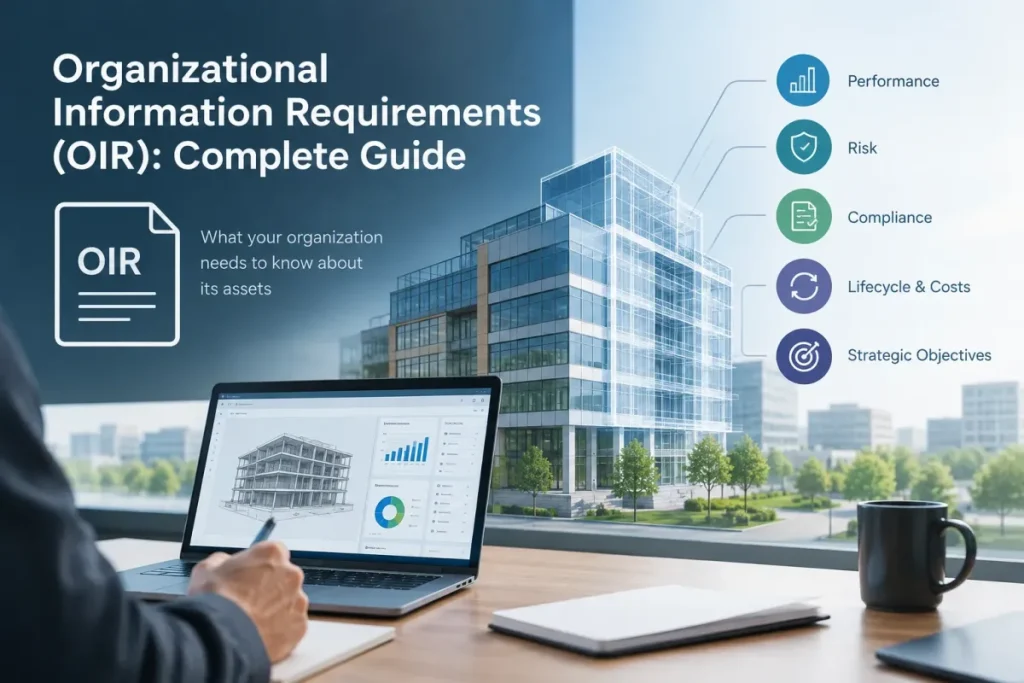
How to write Organizational Information Requirements: business questions, contributors, a 10-step method, a worked example and how OIR feed AIR and PIR.

OIR, AIR, PIR and EIR explained: the chain of information requirements in ISO 19650, who writes each, what they contain, a worked example and typical problems.
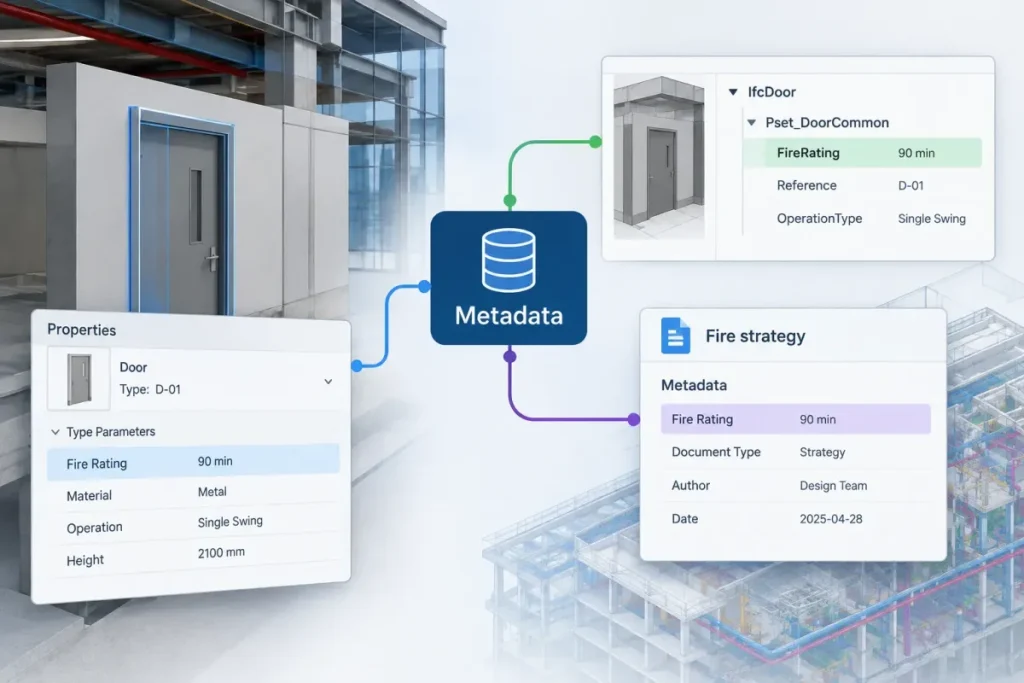
Metadata, attributes, properties and property sets explained: four layers of information, how they map across tools and IFC, and how to build a property catalogue.

How ISO 19650 container identification works: fields, national annex conventions, status and revision metadata, designing your own convention and enforcing it.