BIM vs. Digital Twins: Differences, Connections, and Applications
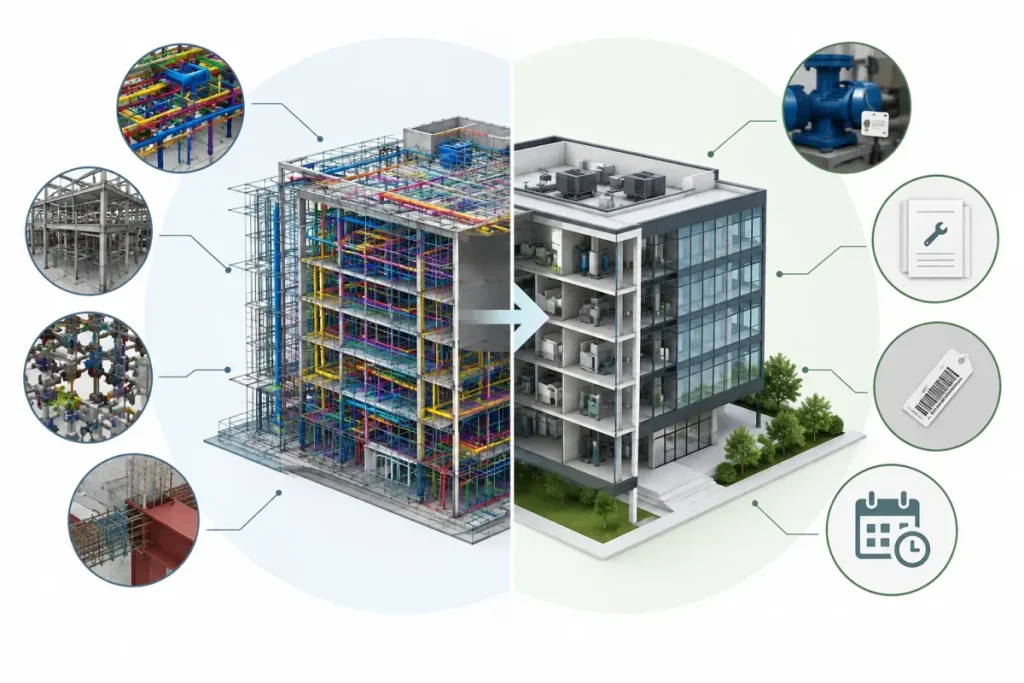
BIM versus digital twins: definitions, strengths of each, how they fit together, what the AIM contributes, lifecycle applications, misconceptions and how to decide.


BIM versus digital twins: definitions, strengths of each, how they fit together, what the AIM contributes, lifecycle applications, misconceptions and how to decide.
Digital twins in construction: definitions and terminology, components, the role of BIM and the AIM, lifecycle applications, maturity, implementation, data, challenges and value.
PIM versus AIM: definitions, key differences, what passes at handover, a mapping table, what to leave out, ownership and common confusions.
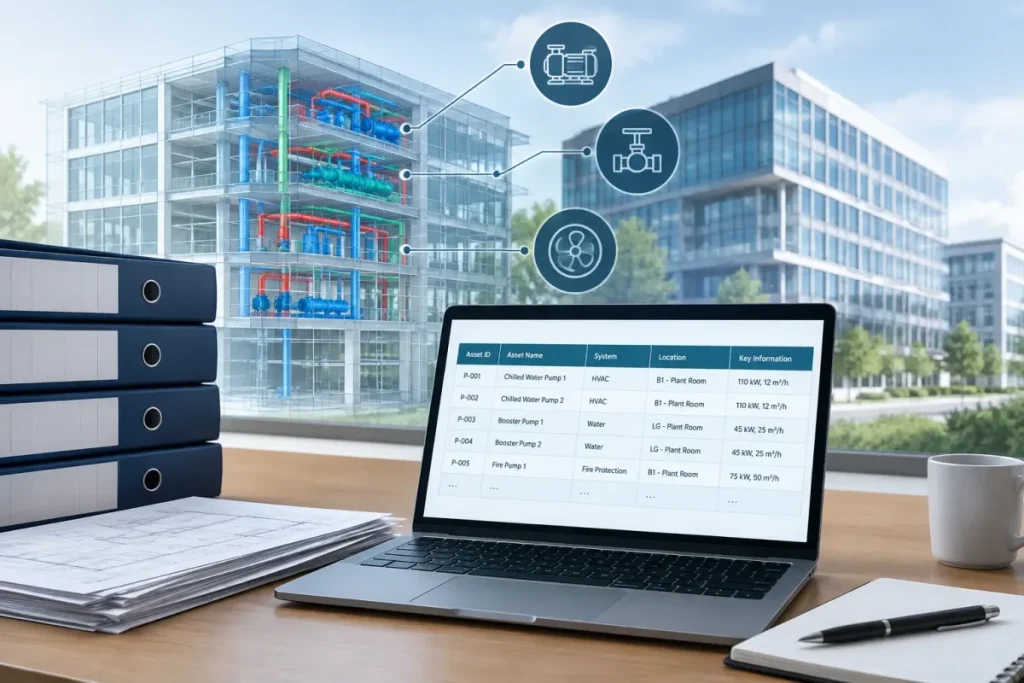
Asset information models (AIM): what they contain, how to create them from handover or surveys, structure, control, trigger events, quality, roles and governance.
The complete guide to BIM for facility management: FM needs, the information chain from project to operation, uses in spaces, assets and compliance, systems and existing buildings.
BIM for owners and developers: OIR and AIR, client-side roles, procurement, oversight, handover to the asset information model, and differences for developers and public owners.
Asset Information Requirements explained: asset tiers, information per asset type, format, quality criteria, COBie, a worked example and how to verify handover data.
The complete overview of BIM information management under ISO 19650: roles, the information lifecycle, documents, a practical roadmap and how to measure it.
ISO 19650-6 on health and safety information: scope, the health and safety information cycle, filtering of risks, integration with the ISO 19650 process and how to apply it.
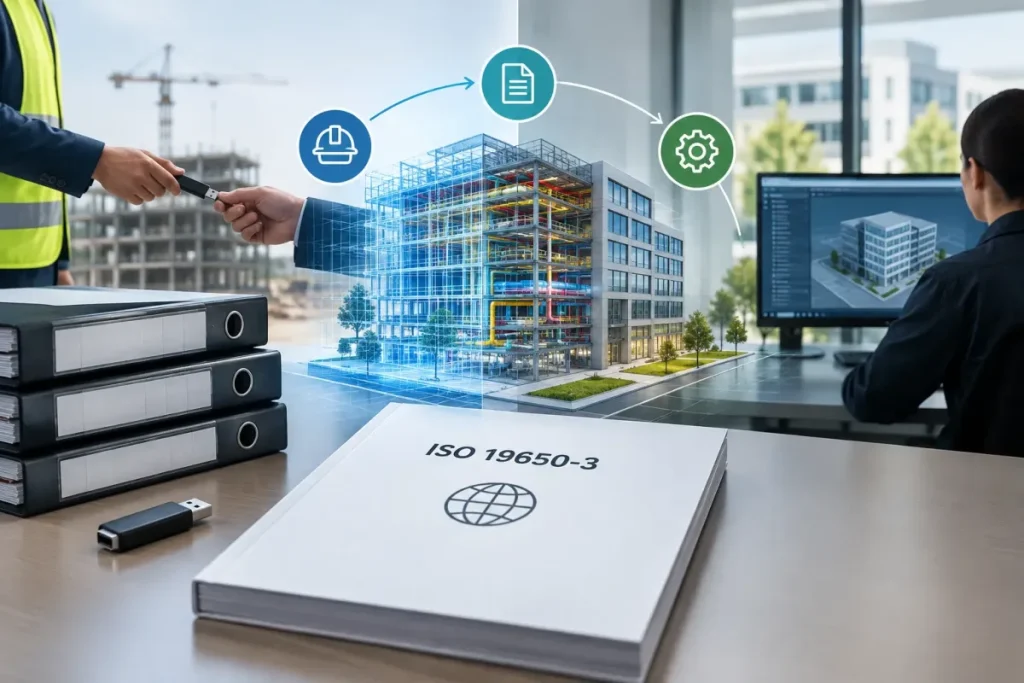
ISO 19650-3 covers information management in operation: the asset information model, trigger events, handover from the PIM and how an owner can start.