Exchange Information Requirements (EIR) Template and Example
EIR template and example: ten sections with guidance, vague-to-testable rewrites, a worked requirement statement, a proportionality check and a review checklist.


EIR template and example: ten sections with guidance, vague-to-testable rewrites, a worked requirement statement, a proportionality check and a review checklist.
BIM model handover checklist and requirements: what is handed over, specifying requirements, a five-phase checklist, sampling with a worked example and acceptance criteria.
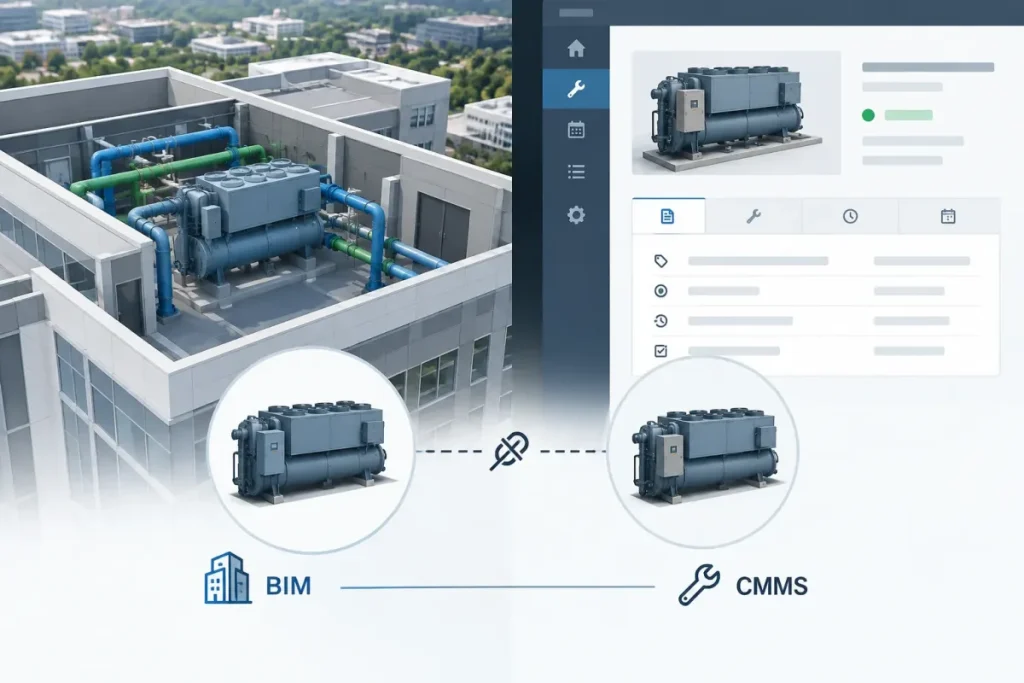
BIM and CMMS: the systems, data ownership, integration patterns, data mapping, loading and testing, daily use, keeping systems in step and selecting systems.
COBie explained: what it is and is not, the table families, version 3 changes, formats, how data are created, sensible specification, validation and use after handover.
PIM versus AIM: definitions, key differences, what passes at handover, a mapping table, what to leave out, ownership and common confusions.
The complete guide to BIM for facility management: FM needs, the information chain from project to operation, uses in spaces, assets and compliance, systems and existing buildings.
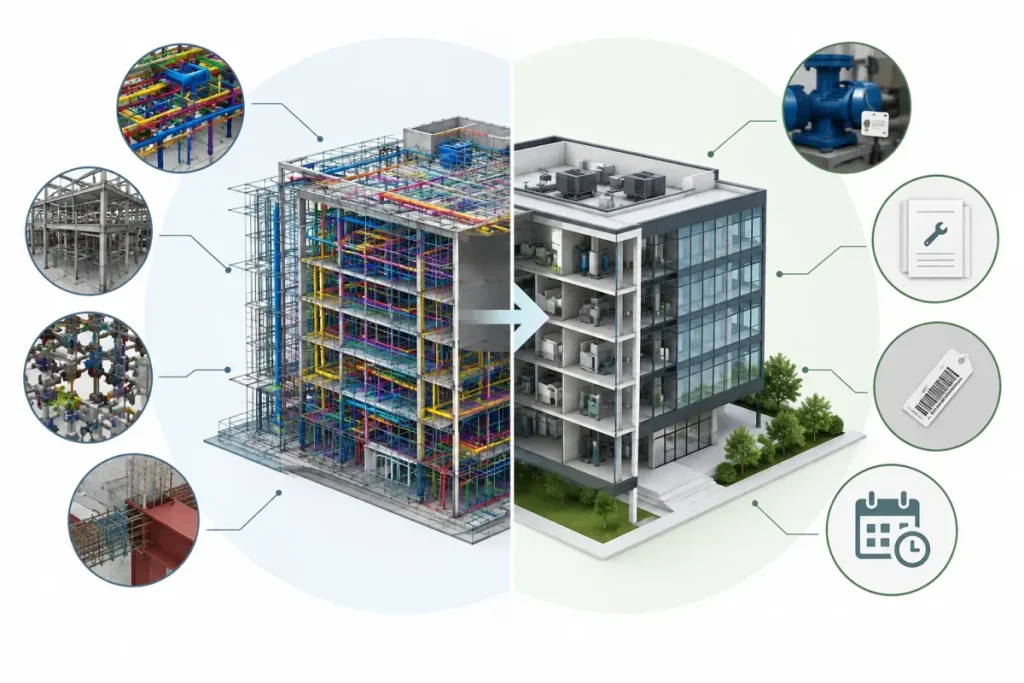
BIM for as-built documentation and project handover: terminology, planning, capturing changes, verification, updating models, asset data, deliverables and acceptance.
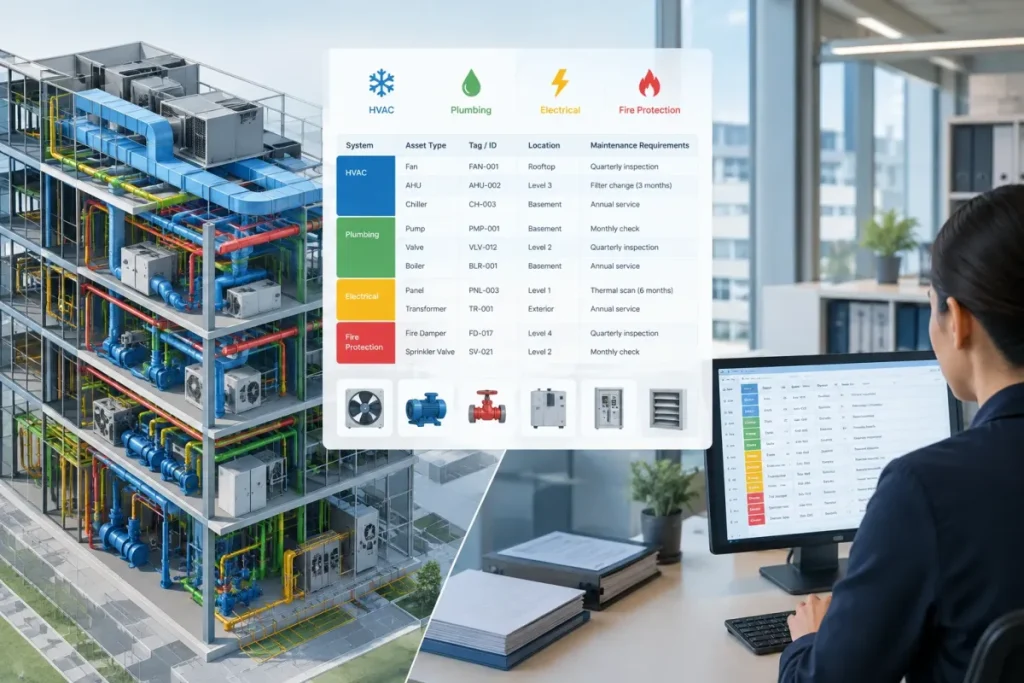
MEP systems classification and asset data: hierarchy, classification schemes, tag design, required data by criticality, COBie and IFC, data flow and verification.
Asset Information Requirements explained: asset tiers, information per asset type, format, quality criteria, COBie, a worked example and how to verify handover data.
3D, 4D, 5D, 6D and 7D BIM explained clearly: what each dimension adds to the model, how it is used on projects, and why the numbering is not a formal standard.