Project Information Models (PIM) vs. Asset Information Models (AIM)
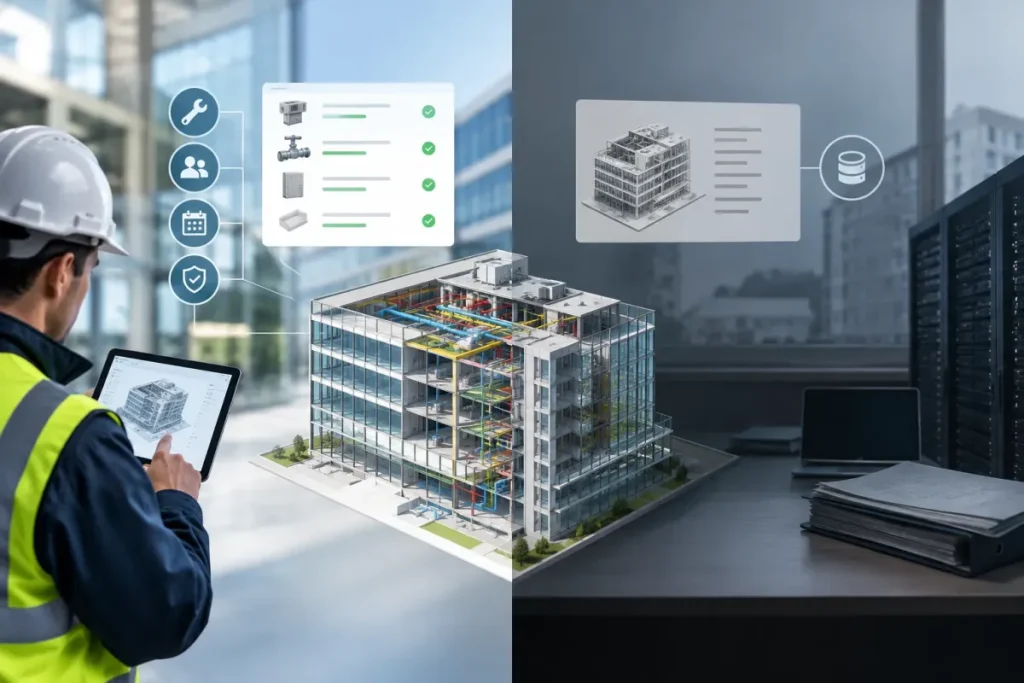
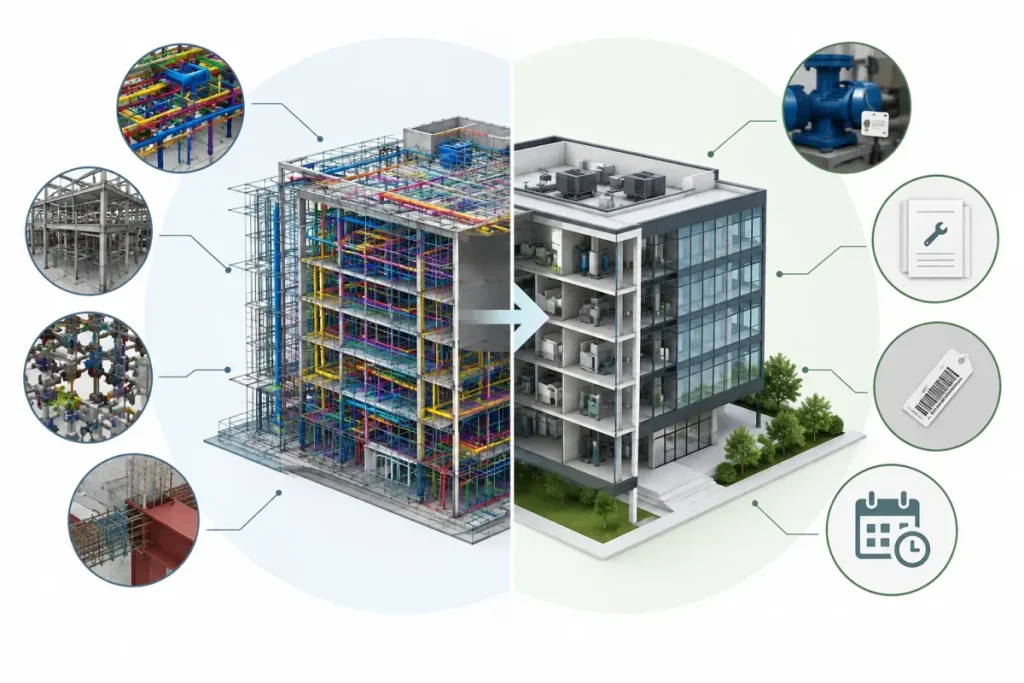
PIM versus AIM: definitions, key differences, what passes at handover, a mapping table, what to leave out, ownership and common confusions.


PIM versus AIM: definitions, key differences, what passes at handover, a mapping table, what to leave out, ownership and common confusions.
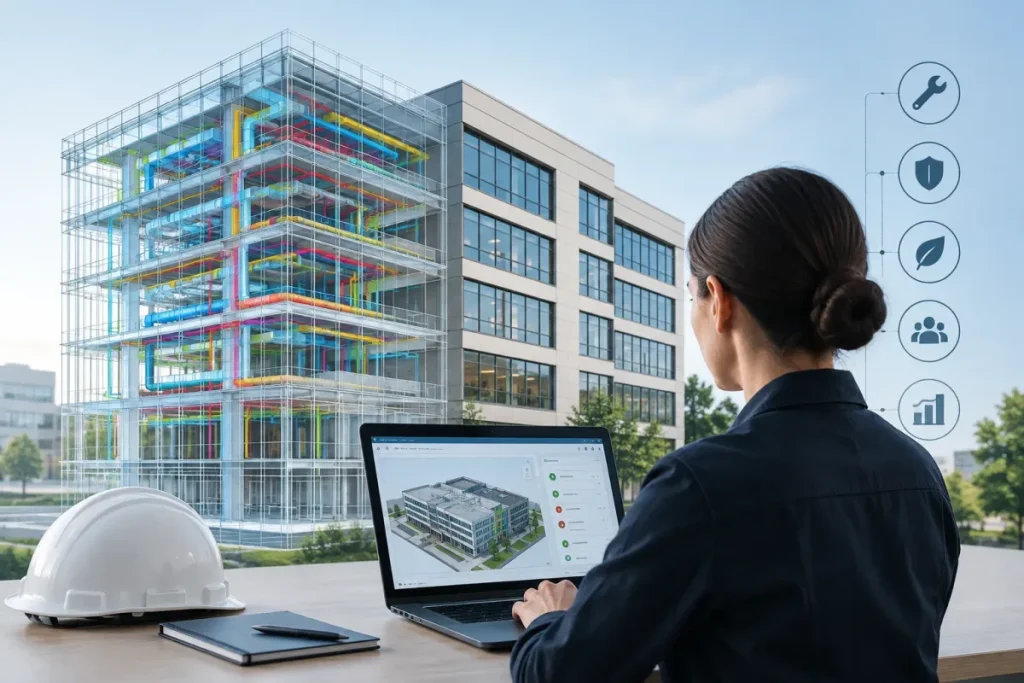
Asset information models (AIM): what they contain, how to create them from handover or surveys, structure, control, trigger events, quality, roles and governance.
The complete guide to BIM for facility management: FM needs, the information chain from project to operation, uses in spaces, assets and compliance, systems and existing buildings.
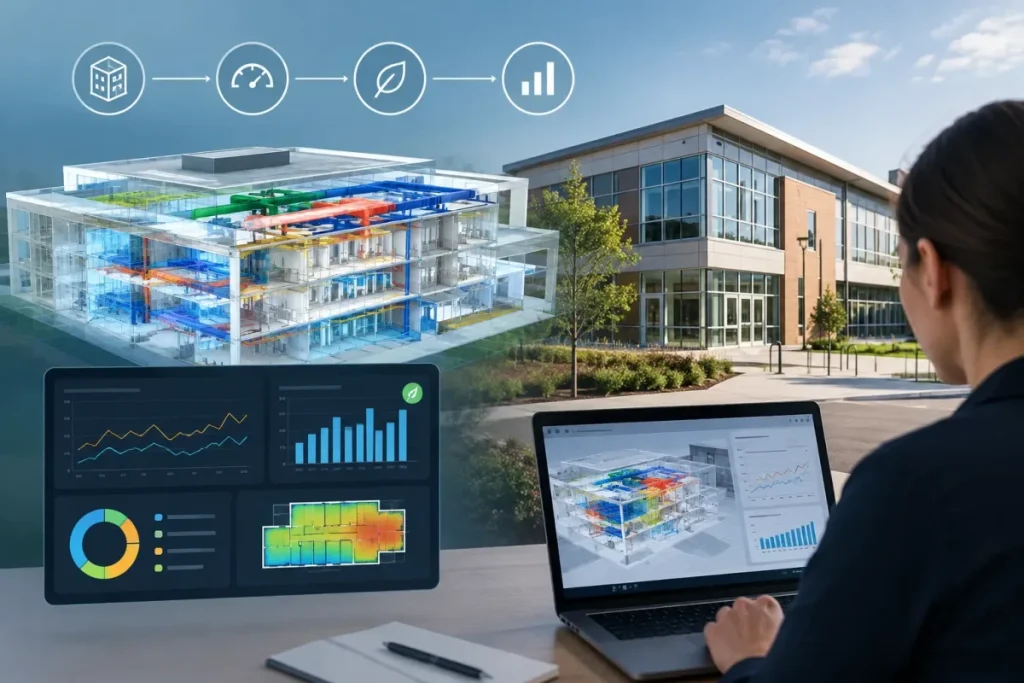
BIM for building performance monitoring and energy optimization: the performance gap, monitoring strategy, point mapping, measured versus predicted, optimization, comfort and data security.
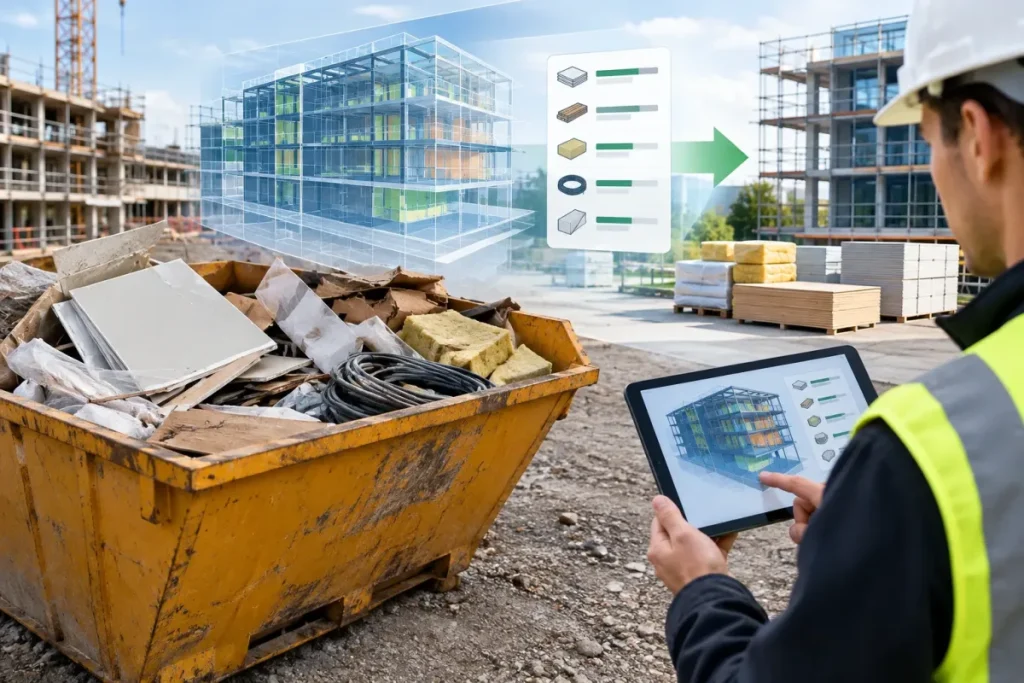
BIM for construction waste reduction and material optimization: design out waste, accurate quantities, cutting optimization, logistics, reuse, passports, waste tracking and metrics.
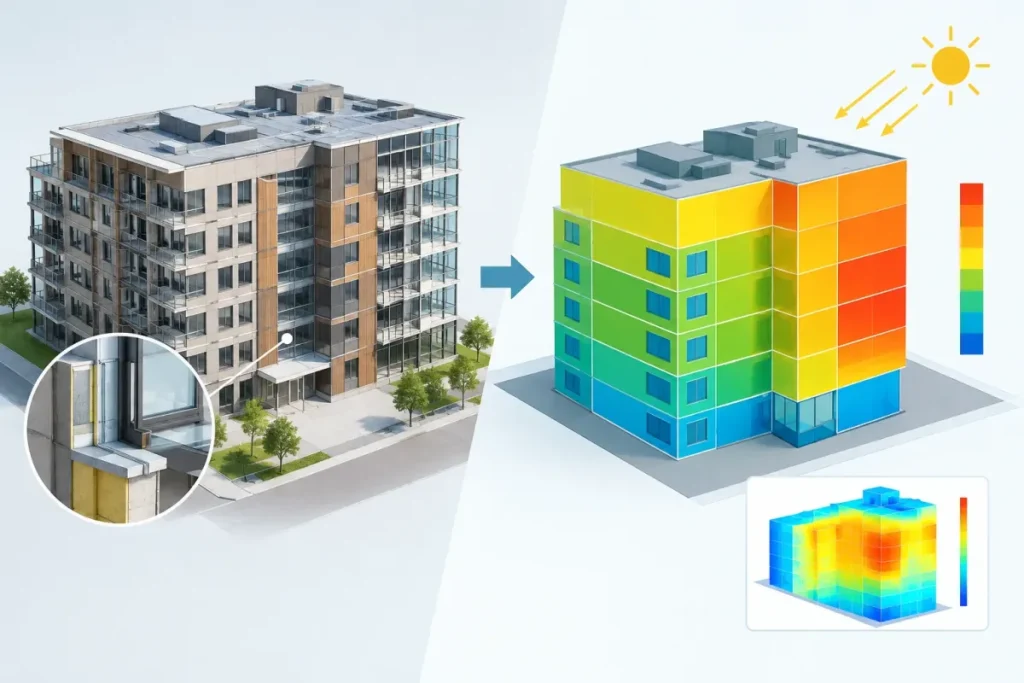
BIM for daylighting, solar and thermal analysis: objectives and metrics, model inputs, preparing and checking analysis models, trade-offs, links to energy and certification.
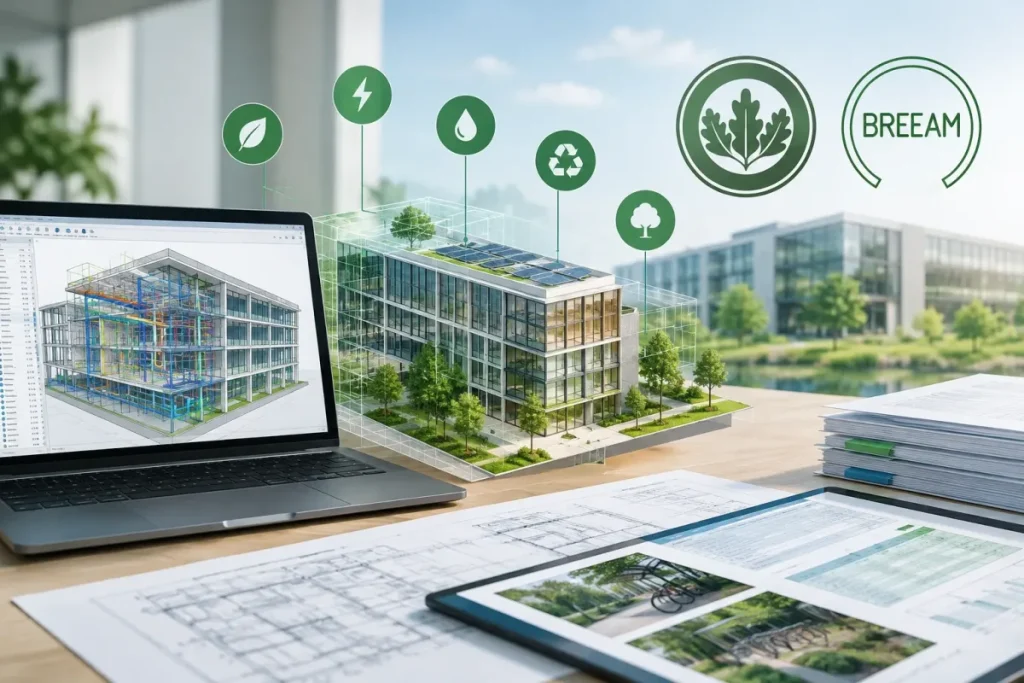
BIM for green building certification: LEED v5 and BREEAM v7 context, planning information requirements, a credit tracker, evidence by category and working with assessors.
BIM for life cycle assessment (LCA): the four phases, standards, goal and scope, inventory from BIM, impact categories, interpretation, workflows, uncertainty and reporting.
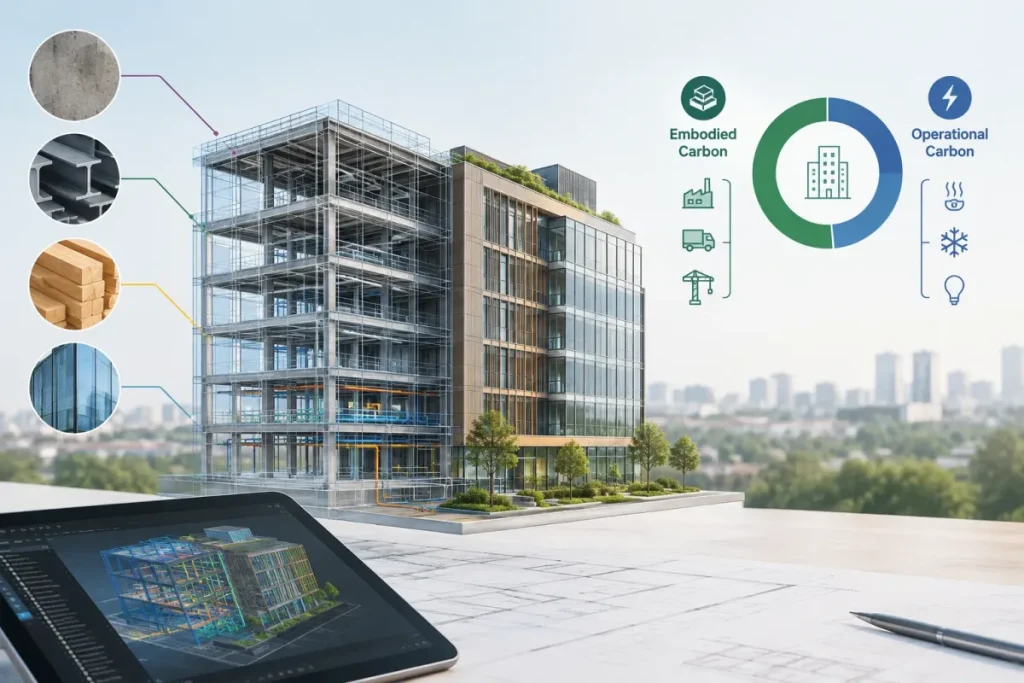
BIM for embodied carbon assessment: life cycle modules, EPBD and RICS frameworks, scope, quantities, carbon data, workflow by stage, a fictional example and reporting.
BIM for energy analysis and building performance simulation: analysis types and metrics, what BIM provides, model transfer, checking, option studies and honest reporting.