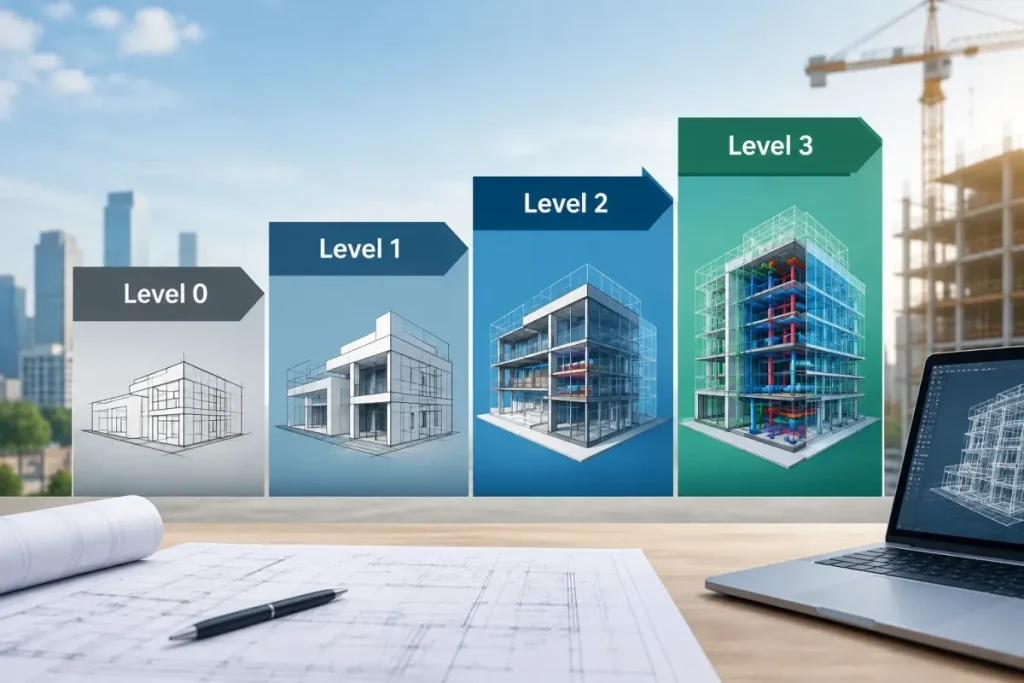
BIM Maturity Levels (Level 0 to 3) and the Shift to ISO 19650
BIM Levels 0 to 3 explained, why ISO 19650 replaced the UK Level 2 framework, a terminology cheat sheet and what to answer when a client asks for Level 2.


BIM Levels 0 to 3 explained, why ISO 19650 replaced the UK Level 2 framework, a terminology cheat sheet and what to answer when a client asks for Level 2.
20 common BIM myths, from “BIM is just 3D” to “BIM replaces CAD”, with where each comes from, the reality and what it means in practice.
The real benefits of BIM for owners, architects, structural and MEP engineers and contractors, the conditions needed to get them, and what BIM does not do.
From Sketchpad and Eastman’s Building Description System to ArchiCAD, Revit, IFC, national mandates and ISO 19650: the story of BIM and what it teaches us.
32 common BIM mistakes in strategy, setup, modeling, data, collaboration and training, with the cost of each and a practical fix, plus a 15-minute self-audit.
A BIM model is authored by one team; a federated model combines several for coordination. Learn the difference, why merging is risky and how to set up federation.
What a BIM object is, how categories, families, types and instances work, how parameters carry data, and how to build a content library you can trust.
LOD, LOI and LOIN explained side by side: what each term means, where it comes from, and how to specify the information your BIM project really needs.
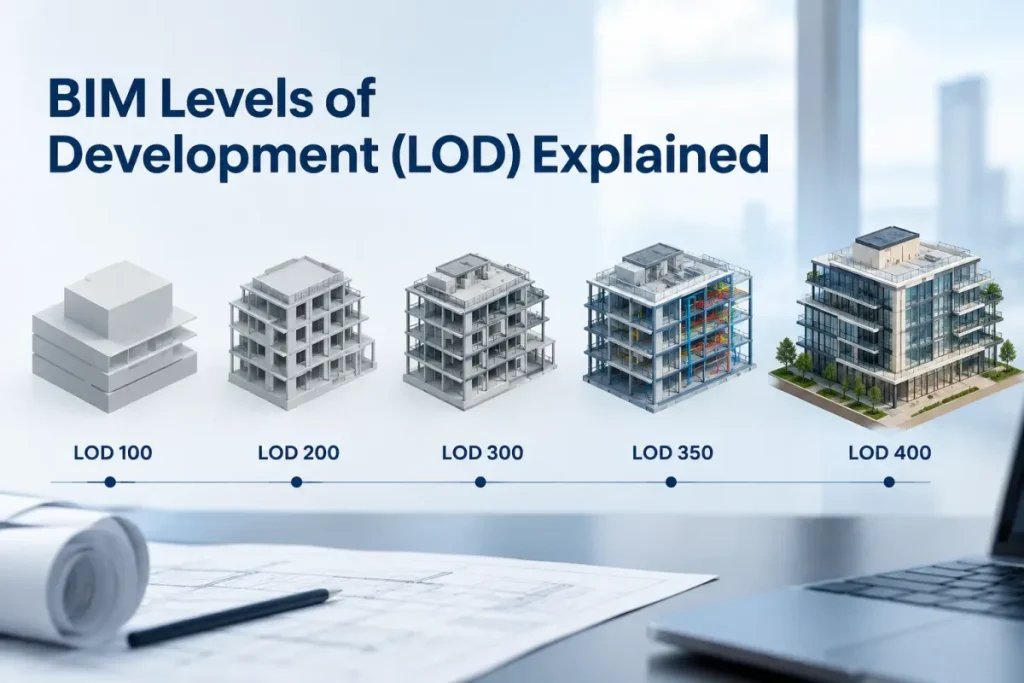
What LOD 100, 200, 300, 350, 400 and 500 really mean, how LOD differs from LOI and LOIN, and how to specify the right level of development for each project stage.
A plain-language A to Z glossary of more than 120 BIM terms and acronyms, from BEP, CDE and EIR to IFC, LOD and LOIN, explained for beginners.